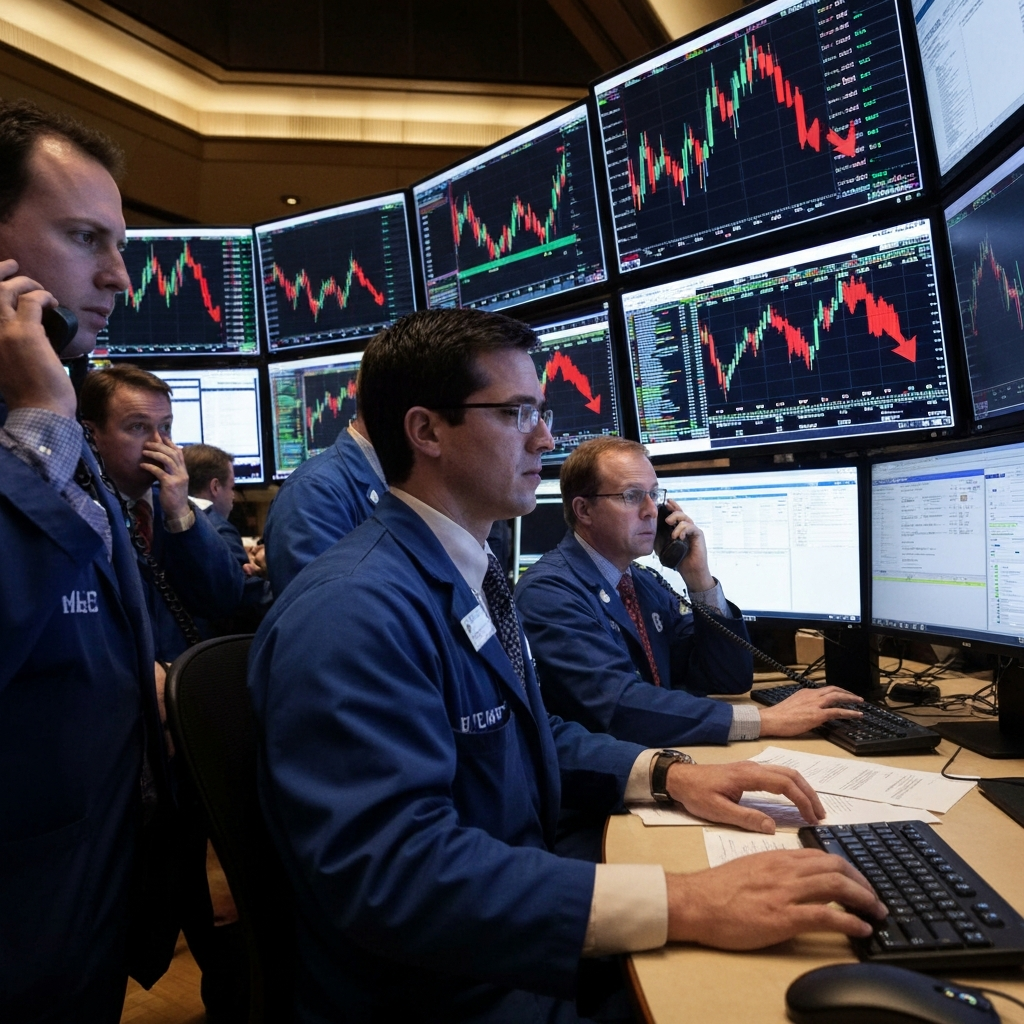
WASHINGTON D.C. – President Donald J. Trump ignited new trade tensions on April 2, 2026, by issuing two Presidential Proclamations that significantly adjusted existing Section 232 tariffs on steel, aluminum, and copper, and imposed a sweeping 100% tariff on patented pharmaceutical products and their ingredients. The announcements, justified by national security concerns, have injected fresh volatility into U.S. markets, with the S&P 500 index already down 4% for the year as of April 1, and continuing to navigate a complex landscape of geopolitical conflict and rising recession fears.
The proclamations, detailed in White House fact sheets, immediately alter tariff structures on a range of metal products. Goods made almost entirely of steel, aluminum, or copper will face a 50% tariff, while certain derivative articles will incur a 25% levy, effective April 6. Products from the United Kingdom, however, will be subject to lower tariffs, ranging from 15% to 25% depending on content. A 200% duty persists for aluminum goods containing Russian-smelted aluminum. More controversially, new tariffs of 100% were imposed on patented pharmaceutical products and their ingredients. These steep levies are set to take effect in 120 days for large companies and 180 days for smaller firms, though lower rates of 10-20% apply to products from the European Union, Japan, Switzerland, and Liechtenstein. Companies agreeing to "onshoring plans" and Most Favored Nation (MFN) pricing agreements with the U.S. government could see tariffs drop to 0% through January 20, 2029.
The latest tariff actions come as the U.S. stock market grapples with a turbulent start to 2026. The S&P 500 recorded its worst first quarter since 2022, declining 4.6% by the end of March. Early April has seen mixed signals: the index posted modest gains of 0.7% on April 1 and 0.1% on April 2, but also experienced a 1.25% drop on April 2 following President Trump's speech, which analysts linked to "wilting" hopes of de-escalation in the ongoing Middle East conflict. Despite this, the S&P 500 managed a 0.4% rise on April 6, closing at 6,611.83, marking its first winning week in six, driven by reports of a potential "strategic conclusion" to Middle East military tensions and cooling energy markets. This indicates that while tariffs remain a significant factor, market sensitivity to immediate energy supply disruptions might currently outweigh long-term trade friction.
Amidst the trade policy shifts, concerns about a potential U.S. recession are intensifying. While Ryan Detrick, chief market strategist at Carson Group, expressed optimism on April 2 that the U.S. economy is not heading into a recession, citing strong corporate fundamentals, other institutions are more cautious. Goldman Sachs now forecasts a 30% chance of a U.S. recession within the next 12 months, an increase from its earlier 25% estimate. Moody's is even more guarded, assigning a 49% probability, noting it could exceed 50% if oil prices continue their surge. Oil prices indeed remain a critical variable, with U.S. crude hitting $112.41 per barrel and Brent crude at $109.77 on April 6. Vanguard analysts suggest oil prices would need to surpass $150 per barrel and remain there for the rest of the year to trigger a U.S. recession. The Federal Reserve, meanwhile, held policy rates unchanged at 3.50%-3.75%, forecasting only one rate cut in 2026 and raising inflation forecasts due to elevated energy prices.
The economic impact of ongoing and re-introduced trade protectionism is a growing concern. The Tax Foundation, in an April 2, 2026, report, estimates that existing Section 232 tariffs will reduce long-run U.S. GDP by 0.2 percent. The report also projects the average effective U.S. tariff rate for 2026 to be 5.6%, which would be the highest since 1972. Tariffs have already contributed to rising costs for consumers, with a U.S. grocery survey showing 33 out of 55 staple items experiencing price increases, including oranges and tomatoes up more than 75% since tariffs began. Manufacturing employment has also seen a decline of 89,000 jobs from April 2025 levels. Adding another layer of complexity, the Supreme Court's February 2026 ruling that the previous International Emergency Economic Powers Act (IEEPA) tariffs were unconstitutional has led to approximately $166 billion in refunds owed to importers, with interest accruing at $700 million per month. Jamie Dimon, CEO of JPMorgan Chase & Co., cautioned in his April 6 annual letter to shareholders that "anything less than positive outcomes could have a dramatic impact on global markets" amidst lasting global economic impacts from wars and shifting trade dynamics.
Looking ahead, the interplay between U.S. trade policy, geopolitical events, and economic stability will continue to dominate financial headlines. While the new pharmaceutical tariffs are anticipated to spur significant domestic investment, with approximately $400 billion in new commitments, the broader impact on global supply chains and consumer prices remains under scrutiny. The Section 122 replacement tariffs, implemented after the IEEPA ruling, are set to expire on July 24, 2026, setting the stage for renewed debate over their extension. Investors and businesses face an environment where policy uncertainty and global conflicts continue to reshape trade flows and market sentiment, demanding vigilance and adaptability in the coming months.